


CAP-HAITIEN, HAITI – Over the years, I’ve been asked to name my favorite possession. My answer seems to surprise people. It’s not a car. It’s not a house. It’s not a piece of memorabilia, like a signed baseball bat, nor a work of art or a family heirloom.
It’s my passport.
Or passports, now. I’ve had multiple ones. I’ve kept them all. They are rubber banded in a drawer, and once in a while I look through them, as I am looking through my current passport as I write this, traveling through Haiti.
My original passport, from the 1970s, has a teenage photo of myself, looking serious, in a turtleneck, my long hair covering my ears. It contains a stamp of my first-ever overseas trip, to France, with my father and mother, when I was still in high school. It was a business trip and they took me along.
I remember we had dinner in Paris on New Year’s Eve, in a restaurant off the Champs-Élysées. I wore a tie. I didn’t know what I was eating. When we exited, after midnight, it was brisk and windy and the lights of the city were magnificent. I felt older.
I slept that night on a cot in my parents’ room and heard the traffic in the morning. That day, on the street, my father bought me my first crepe, with butter and sugar inside. I loved it and asked if I could have another. He smiled and paid with French francs he had gotten at the hotel.
That was 50 years ago.
My parents are long gone now.
The passport stamp remains.
Passport: Our ticket to the world
My next passport shows a photo of me as a young man, in my early years in journalism. It is so stuffed with stamps, there’s not a blank page remaining. Most of those stamps recall stories written for this newspaper, including a double-page visa to Russia (the Goodwill Games) a large stamp from Australia (America’s Cup), multiple admittances to England (Wimbledon), Scotland (the British Open) Seoul, South Korea (the Olympics) and Spain (running of the bulls in Pamplona.)
My subsequent passports chronicle many trips as an author on book tours. They, too, fill the pages, and run the gamut from Singapore to China to Brazil to Israel. There are faded stamps from vacations that blur together, and lettering from countries that I can’t even read.
With each passport, my photo ages (that’s the annoying part) but my travels grow (that’s the blessed part). It’s the reason I cite them as my favorite possessions. Those documents chronicle my life on this Earth, and my ability to roam the planet and witness its breathtaking landscapes and fascinating cultures.
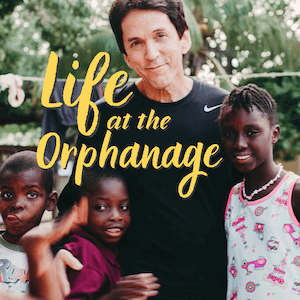
I have always treasured my passport. But I never truly appreciated it until recently. My current version is mostly filled with stamps from Haiti. And I am traveling here now with two Haitian children, who are heading home after receiving medical treatment in the United States.
We each have our little blue booklet, “our papers,” as they used to say, our ticket to the world.
Except mine lets me go almost anywhere.
And theirs is welcome almost nowhere.
No passport stamps for luck
Did you know there are only 15 countries in the world where a Haitian citizen can travel without a visa? Most of them are in Africa. Two are in Asia. What good do those places do them? Even if a Haitian had the money to get to those faraway ports, there’s no way to do it, because there are no flights from Haiti that don’t go through the United States or some other country, and for a Haitian to land there requires a visa that is almost never granted.
We take our transit for granted. If you or I (American citizens) want to board a plane today to Germany, Italy, Iceland or Chile, we can. Want to visit the equator? Get on board. Want to see the Eiffel Tower? Just buy your ticket.
But imagine being told no, you’re not welcome, you can’t come in without papers and we’re not issuing you papers. That is daily life for Haitian citizens just about everywhere ― including the Dominican Republic, which shares the same island as Haiti.
Now, the nations who employ such restrictions will argue that allowing Haitians to enter freely would result in many of them staying permanently, even illegally, which has certainly happened in the past. When you live in the poorest nation in the Western Hemisphere, where food is scarce, jobs nonexistent, electricity and water in short supply, and gangs are burning your neighbors out of their homes, you might take a chance on staying in a safe place, too.
So, the doors are shut to people from Haiti. Whether they should or shouldn’t be is a debate for another time.
But every trip I take here (I operate an orphanage in Port-au-Prince and try to visit monthly) I am reminded of the freedom with which Americans can roam, and the barriers that deny so many others. And it doesn’t seem fair. I get a passport full of faraway memories, while the kids we take care of will likely never see any of those places.
And the only difference is where we were born?
My favorite possession lets me tell a story of travel and adventure. But it’s mostly a story of good luck. Next time you pull out your American passport, it’s worth remembering how that luck isn’t the same for everyone.
Contact Mitch Albom: malbom@freepress.com. Check out the latest updates with his charities, books and events at MitchAlbom.com. Follow him @mitchalbom.


0 Comments